
Urine Collection Containers: Types & Selection
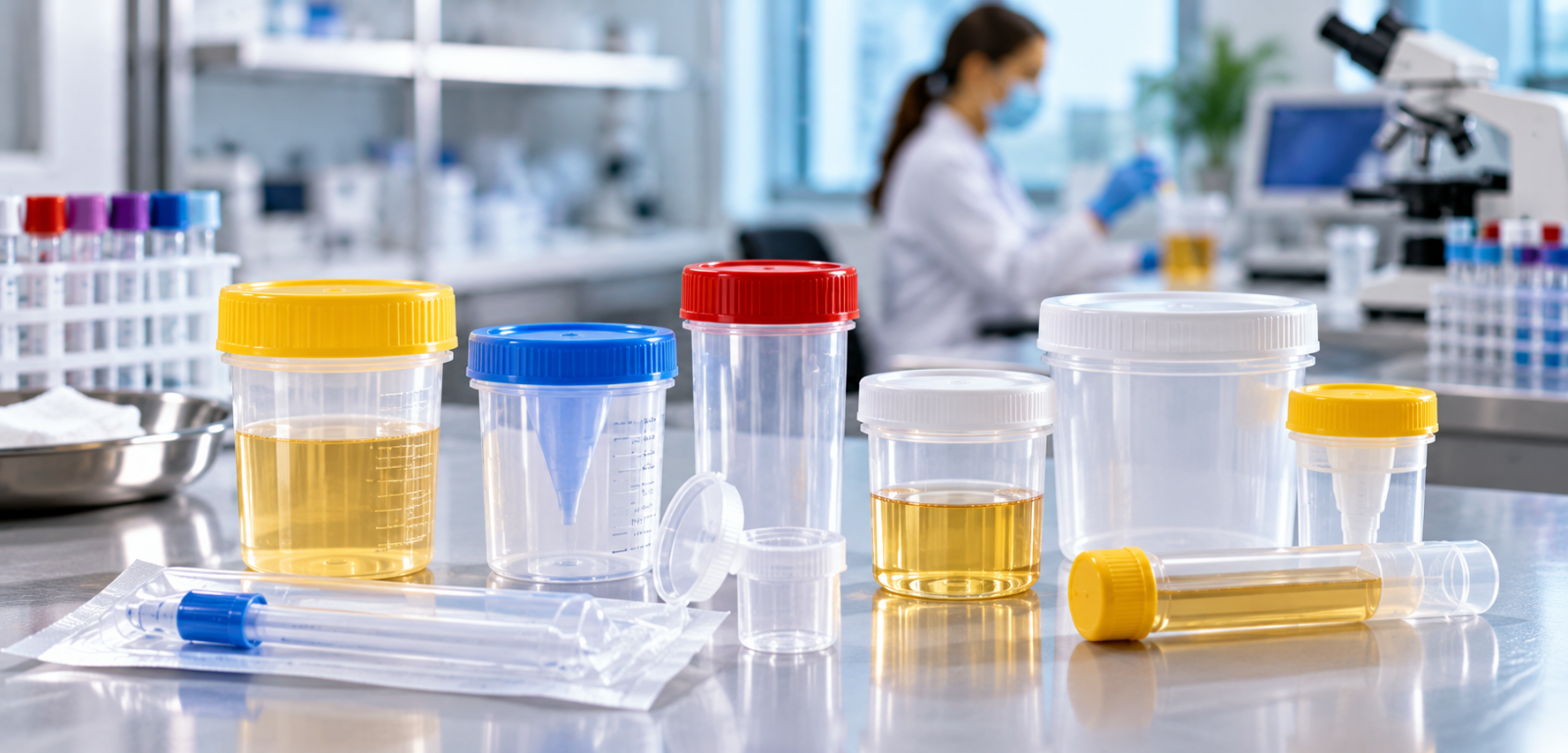
Standard Urine Cups
These are the collection vessels for individual urine samples. The most common commercial size is either 60 ml or 120 ml, although other sizes are available.
The capacity of the container does not equal the volume of the sample required. Just because the pot is bigger doesn't mean the patient has to fill it up. The receiving laboratory will indicate the required volume and appropriate container.
Urine cups, sterile
Microbiology Collection: For urine culture, a sterile urine container is usually required. NHS collection guidance suggests a sterile container should be used to collect a mid-stream urine specimen.
Be sure when you purchase it that it is labelled sterile, and check how it is kept sterile before use. Just because it looks like another product, don’t assume that all screw-cap pots are sterile.
Alternatively, if a laboratory accepts a non-sterile container for a particular application, obtain that confirmation before ordering.
Containers and Tubes With Preservatives
Some urine collection systems may contain preservatives for specific tests or for transport conditions. These products are not alternatives to plain containers.
BD has different preservative formulations for culture and sensitivity specimens and for urinalysis. The selection should be according to the requirements of the laboratory and the product instructions.
Filling the container correctly is also important. UK government guidance states that underfilling a boric acid specimen container can affect culture results and that boric acid can interfere with urine dipstick testing.
24-Hour Urine Collection Cups
A little specimen pot is not the way to do timed collections. A 24-hour urine collection container is designed to hold urine collected over the time specified. An example from one manufacturer can hold three litres.
Some tests require a preservative, and others have other collection requirements. Clinics should supply the laboratory-approved container and appropriate instructions. Do not delete or rinse out the preservative supplied.
Containers with Built-in Transfer Systems
Some urine specimen containers have a urine transfer device for transferring urine to compatible evacuated tubes. BD describes a closed collection system that minimises the need to transfer specimens between containers.
Check compatibility with the lab's tubes and handling procedures before purchasing. Staff must follow the manufacturer’s instructions, including precautions for any hidden transfer needle.
Why Elumia Med Store?
Elumia Med Store has an online catalogue of medical and laboratory consumables including sample cups, laboratory tubes, pipettes and urine testing strips. This is a useful starting point for clinics when considering their wider laboratory supply requirements.
For urine collection containers, please send us your exact requirements before ordering. Please indicate capacity, sterile or non-sterile, preservative requirements, packaging preference and quantity so that available options can be matched with your laboratory’s requirements.
Final Thoughts:
The appropriate urine collection container must be suitable for the test and allow for easy collection, identification and transportation. Price is as important as sterility, preservative compatibility, capacity and closure design."
First check the requirements of the laboratory and compare products to that specification. This allows clinics to purchase the right supplies and avoid unnecessary collection problems.
FAQs
1. What is the difference between a 60 ml and a 120 ml urine container?
The main difference is the capacity. The size relative to the collection requirement and laboratory process is determined. The size does not determine the amount of urine to be collected. Follow the laboratory’s instructions for the volume of the sample.
2. Do I need to bring in a sterile urine container for a urine culture?
Usually, you need a sterile collection container to collect a urine culture specimen. The laboratory might ask for a plain sterile pot or a special preservative system, so look at its instructions before buying.
3. Is one urine container enough for all tests?
No. Routine urinalysis, culture, and 24-hour collections may need different containers or preservatives. Use the container approved by the receiving laboratory for the test requested.
4. What do clinics need to verify before ordering urine containers in bulk?
Verify product reference, capacity, sterility, preservative status, closure specifications, label space, units per carton and expiry information where applicable. Please check the availability and delivery terms before ordering.