
Essential Medical Consumables Every Clinic Should Always Keep in Stock
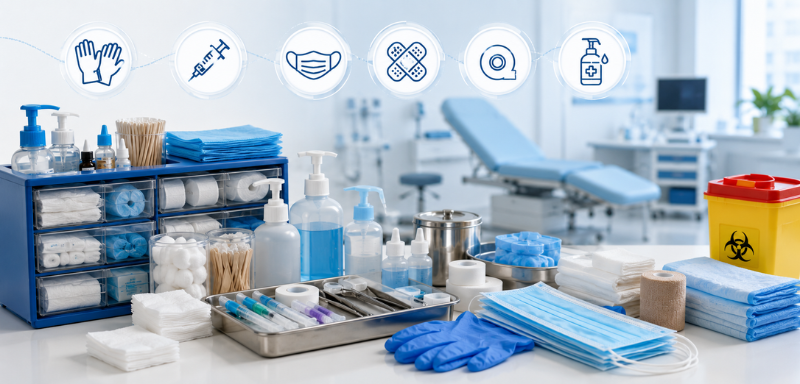
The Must-Have Medical Items Every Clinic Should Always Keep in Stock
A missing box of gloves may seem like a small problem—until a busy clinic needs them immediately. The same applies to dressings, syringes, specimen containers, and disinfectant products.
Medical consumables are used quickly, often every day, which makes stock management surprisingly important. The goal is not simply to fill a storeroom. It is to make sure essential items are available when patients and healthcare teams need them.
So, what should clinics keep a particularly close eye on?
PPE That Moves Quickly
Gloves, surgical masks, disposable gowns, face shields, and other protective items are among the most frequently used supplies in many healthcare settings.
Because usage can rise unexpectedly, relying only on last-minute reordering can create avoidable shortages. Clinics should monitor consumption patterns and maintain sensible stock levels based on actual patient volume and clinical activity.
Everyday Wound Care Basics
Even clinics that do not specialise in wound treatment may regularly need basic dressing supplies.
Sterile gauze, adhesive dressings, medical tape, swabs, absorbent pads, and appropriate wound-care products are common examples. What matters is having the right range for the procedures actually performed at the clinic rather than overstocking products that are rarely used.
Syringes, Needles, and Procedure Supplies
Syringes and needles support everything from medication administration to sample collection and other clinical procedures.
The challenge is that one size rarely fits every need. Clinics should review which types and sizes are genuinely used, keep them correctly stored, and check stock regularly. This reduces both unnecessary purchasing and the risk of discovering a shortage during a busy day.
Diagnostic Consumables
Small disposable items can bring diagnostic work to a halt when they run out.
Depending on the clinic, this may include specimen containers, lancets, testing strips, alcohol swabs, ECG electrodes, tongue depressors, and sample collection accessories.
These products are easy to overlook because many are inexpensive individually. Operationally, however, they can be essential.
Infection Control Supplies
Disinfectants, hand hygiene products, sterilisation supplies, cleaning materials, and appropriate waste-disposal products should never become an afterthought.
These are not simply housekeeping items. They support everyday infection prevention throughout consultation rooms, treatment areas, and shared clinical spaces.
Regular checks are particularly important for products that are used across several departments.
Don’t Forget Emergency Stock
Emergency supplies may sit untouched for long periods—and that is exactly why they can be forgotten.
First-aid consumables, sterile dressings, emergency gloves, and other procedure-specific disposable items should be checked routinely. Availability is only one concern; expiry dates, packaging condition, and storage also matter.
An emergency is the worst time to discover that a critical item is missing or no longer usable.
Good Stock Management Matters as Much as the Shopping List
A clinic can buy every essential product and still experience shortages if inventory is poorly managed.
Regular stock counts, expiry-date tracking, sensible reorder points, and First-Expiry-First-Out (FEFO) rotation can reduce both shortages and waste. It is also worth reviewing actual usage rather than automatically repeating the same order every month.
A reliable supplier relationship can make replenishment easier, but internal stock discipline remains just as important.
The Bottom Line
The right medical consumables depend on the type of clinic, the procedures performed, and patient volume. There is no universal shopping list that suits every healthcare facility.
The better approach is to identify high-use and critical items, monitor them closely, and restock before shortages affect patient care.
At Elumia, we support healthcare facilities across the UAE with medical consumables and healthcare supplies for a range of clinical requirements.
Frequently Asked Questions
What are the most commonly used medical consumables in clinics?
Common examples include gloves, masks, syringes, needles, gauze, dressings, swabs, specimen containers, and infection-control products.
How often should clinic stock be checked?
It depends on usage, but high-consumption and critical items should be reviewed more frequently than rarely used supplies.
What does FEFO mean in medical inventory?
FEFO means First-Expiry-First-Out. Products with the earliest expiry dates are used first to help reduce waste.
Should clinics buy medical consumables in bulk?
Bulk purchasing can be useful for predictable, high-use products, but clinics should consider storage capacity, expiry dates, and actual consumption before ordering large quantities.