
Blood Collection Accessories Every Phlebotomy Area Needs
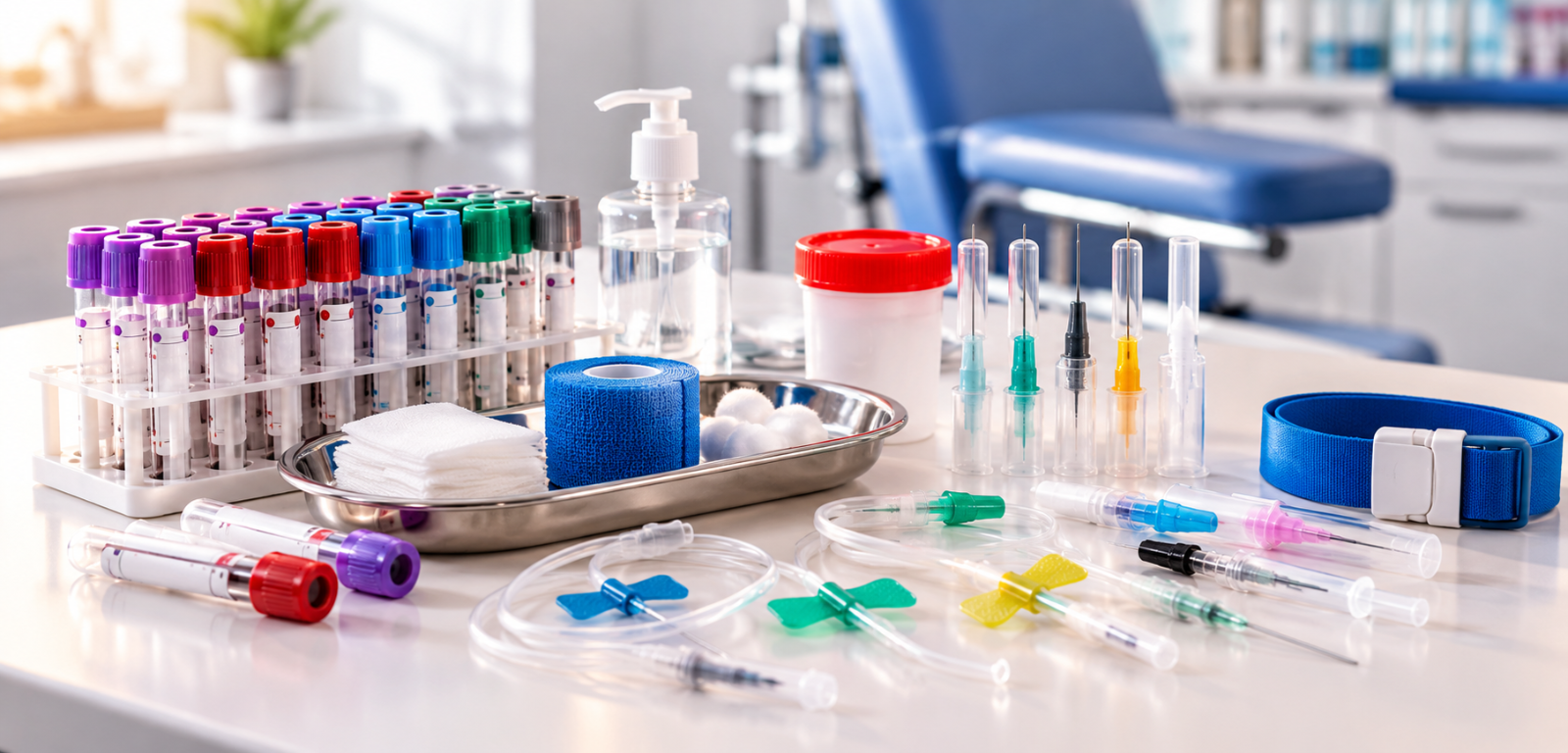
Blood Collection Accessories Every Phlebotomy Area Needs – A Practical Guide
Blood draws are a common task within hospital environments, diagnostic laboratories, clinic settings, and other types of medical care facilities. The availability of appropriate blood draw accessories can aid healthcare providers with organizing their workflow, maintaining compliance with infection control protocols, and properly managing collected samples.
Phlebotomy areas are required to be equipped with much more than just the needle and the collection tube. Each accessory used during the collection process (i.e., personal protective equipment, tourniquets, specimen labels, sharps disposal containers) serves a purpose in ensuring that the collection process is conducted safely and in an organized manner.
Blood Collection Needles, Holders, and Syringes
Blood collection needles and compatible holders are key elements in a variety of routine venous blood collections. The type of equipment required depends upon the method of collection, the patient, and the nature of the collection procedure.
The system used to collect blood can be comprised of an evacuated tube holder, compatible needles, and other acceptable types of collection equipment. While some procedures can utilize syringes, these must be used appropriately based on clinical judgment and the facility's policy.
In addition to being free of contamination, appropriate for the specified application, and current in terms of shelf life, healthcare facilities need to verify that all of the above items are safe for patient care. It is imperative that single-use devices never be used again and that healthcare personnel strictly adhere to the manufacturer's directions as well as to the facility's accepted practices.
Blood Collection Tubes and Specimen Accessories
There are many types of blood collection tubes, each used for a specific laboratory test. The type of tube selected will be based on the testing requirements, the additives required, the specimen type, and the laboratory protocol.
Phlebotomists will have access to the correct type of tube for each procedure when they organize their supply of tubes. Using tube racks helps to ensure that collection tubes remain upright throughout the process of preparing them for use and while using them.
Other helpful specimen accessory products can include sample transport bags, tube labels, barcode labels, and leakproof packaging. These products assist with the identification, organization, and delivery of specimens to the lab.
Samples must be correctly identified and labeled per the facility's policies to minimize potential for sample identification errors.
Tourniquets and Vein Visualization Accessories
Tourniquets are often used by healthcare professionals when collecting venous blood samples to allow for easier identification of veins. Tourniquets must be selected based on their suitability for the specific procedure and must be managed in accordance with the health care facility's infection control protocols.
Depending on where the area for drawing blood (phlebotomy) is located, it may have a machine that can help locate good veins for drawing blood, especially if there are problems getting to those veins.
Staff members need to have adequate training for using venepuncture methods and the proper utilization of the related accessories. When to remove a tourniquet is determined by the specific accessory used. Reusable products must be sanitized (cleaned) or sterilized (disinfected) in accordance with manufacturer recommendations and established local guidelines.
Personal Protective Equipment and Infection Control Supplies
Personal Protective Equipment (PPE) is essential for having a properly set up blood collection site. While gloves are typically worn while performing blood collection, additional forms of PPE like gowns, masks, and/or eye protection may also be necessary depending upon the expected exposure level and what is allowed by the facility.
Hand hygiene products need to be readily available. Appropriate disinfection, skin antiseptic products, and other infection prevention materials should be on hand based upon the needs of the facility.
Used needles and all other sharp objects should be thrown away as soon as possible into an approved container for sharps. These containers must be placed properly, changed based upon how much they have been filled, and processed per the requirements of your local area's health care waste disposal laws.
Safe work environments for health care providers are provided by these supplies, which will also assist in reducing the likelihood of being exposed to blood-borne pathogens.
Specimen Labelling, Storage, and Transport Accessories
Phlebotomy sites need to use appropriate labels, markers, requisition forms, barcode systems, and other methods of identifying specimens used in the laboratory.
Specimen transport accessories (biohazard bags and secure containers) will aid in protecting specimens during their transportation. Some specimens may need to be transported under certain temperature requirements or delivered promptly due to the test being performed.
When receiving, the laboratory has specific storage and transportation procedures that are to be followed. It is important to clearly label, appropriately package, and appropriately handle specimens to ensure that they remain intact during the entire procedure.
Phlebotomy Trays, Tube Racks, and Workstation Organizers
An organized, clean work environment allows employees to obtain needed items quickly. To ensure that items are kept in an orderly fashion, phlebotomy trays, test tube holders, storage containers, and disposable protective items may be utilized to help maintain items in an orderly manner and separate items that have been used from items that have not yet been used.
All work surfaces are required to be kept clean and sanitized based on the facility's cleaning/disinfecting protocols. Supplies need to be continually replaced as they run low. Any equipment that is broken, expired, or contaminated must be pulled out of service.
A simple inventory checklist may be used by healthcare facilities to keep track of their stocks, the expiration dates on the products they carry, and when it is time to order more. This will allow the facility to avoid having to go without critical supplies while performing daily blood draws.
How to Choose Blood Collection Accessories for Your Facility
When buying blood collection supplies, health care organizations need to take into consideration the quality of products, compatibility, what the supply will be used for, sterilization needs, packaging, and any relevant laws/regulations. Supplies must work well for each procedure that is done and must work with the current blood collection system(s).
In addition to reviewing suppliers' performance (i.e., whether they deliver orders as scheduled), it's important to consider other factors such as their product availability, delivery times, and the level of documentation provided prior to placing an order. While buying in bulk can assist in managing inventory levels, bulk orders must be planned according to the amount of product used, the amount of space available for storage, and the expiration date of products.
With Elumia Medstore, healthcare providers are able to review all of the different types of medical products that may be purchased for use in their facilities. They should also verify the accuracy of the product specifications, how it is intended to be used, and if the product will be available when needed prior to placing an order.
Final Thoughts
The necessary equipment for a properly equipped phlebotomy area includes appropriate collection devices, blood collection tubes, tourniquets, personal protective equipment (PPE), specimen labels, transportation materials, and disposal equipment for sharps. All of these items provide a means to create a systematic approach to performing phlebotomy services based upon established clinical guidelines and infection control practices.
By having adequate supplies of blood collection products, ensuring that all blood collection products are compatible with each other, and adhering to standard safety procedures, health care providers will be better equipped to handle both day-to-day routine blood collections and specimen processing.