
Adhesive Dressings for Wound Coverage and Protection
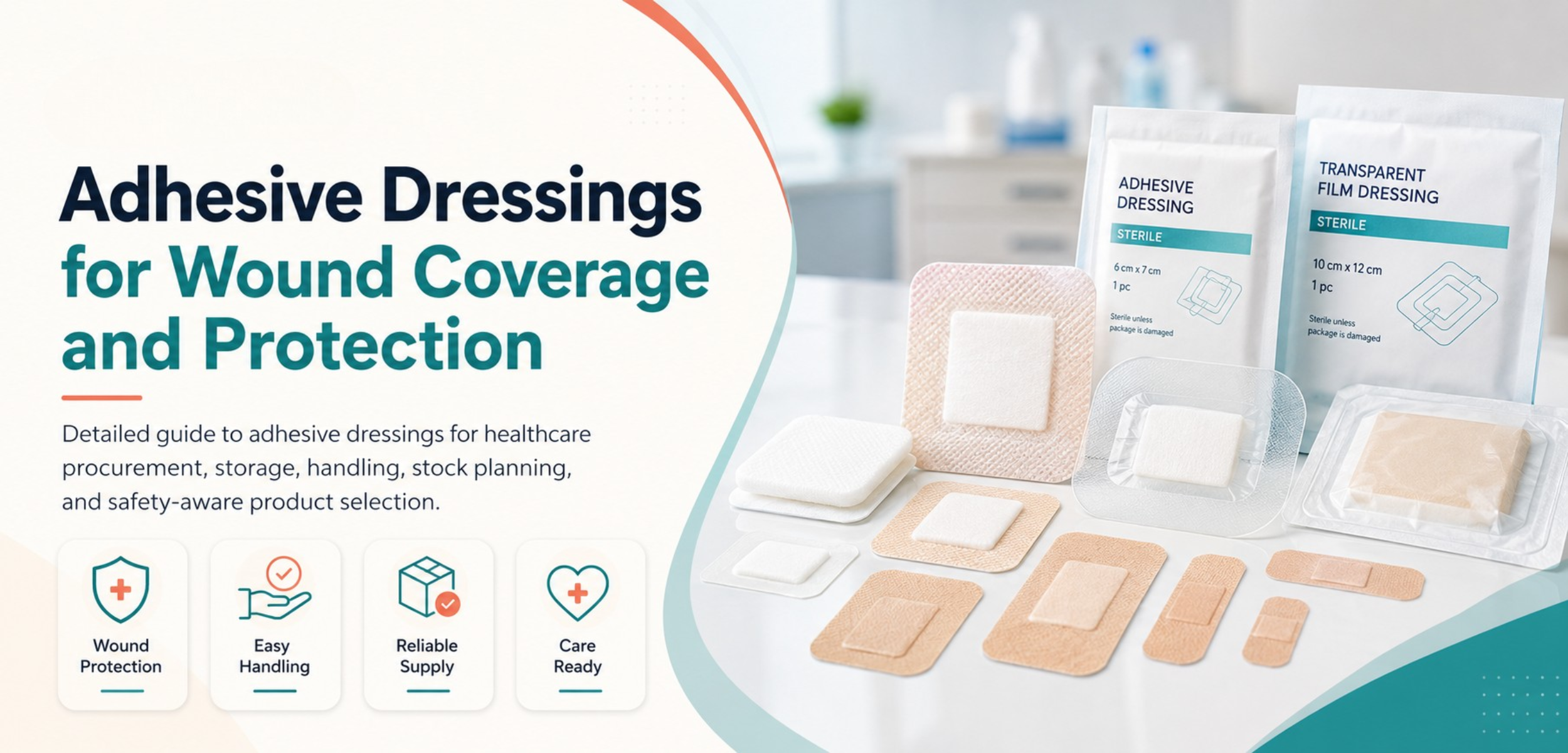
Adhesive Dressing products are part of the daily supply chain for consumables & disposables workflows. For Elumia Medstore customers, a good product page or blog article should explain what the item is used for, how it fits into routine healthcare work, and what buyers should check before ordering. This guide keeps the focus on practical product awareness, safe handling, storage discipline, and procurement clarity.
In a healthcare setting, adhesive dressing products are not chosen only by price. Buyers also consider reliability, packaging, labeling, supply continuity, and how easily staff can identify the correct item during routine work. A clear procurement checklist helps clinics and pharmacies maintain readiness without overstocking or mixing incompatible items.
This Elumia Medstore guide is designed for product education and procurement planning for Adhesive Dressing. It does not replace professional medical, dental, laboratory, or regulatory advice.
Why Adhesive Dressing Matters in Daily Healthcare Supply
Adhesive Dressing supports organized care by helping staff prepare work areas, maintain hygiene expectations, and keep essential consumables available when needed. The exact role depends on the product type, but the general goal is consistent: correct item, correct condition, correct storage, and correct documentation.
Facilities that use adhesive dressing products regularly benefit from clear stock naming, item grouping, and simple reordering rules. When products are arranged by category and subcategory, teams can reduce time spent searching for supplies and improve accountability during audits or stock checks.
Key Buying Checks
Before ordering adhesive dressing products, review the product name, size, unit, pack quantity, manufacturer details, intended use, and storage information. These details help avoid mismatches between procurement expectations and actual clinical workflow needs.
- Confirm that the adhesive dressing product type matches the intended professional workflow.
- Check pack integrity, expiry date, batch details, and manufacturer information before use.
- Store items according to the label and avoid heat, moisture, dust, and direct sunlight unless the product label says otherwise.
- Keep sterile and non-sterile supplies clearly separated to reduce handling mistakes.
- Review facility protocols before placing items in treatment rooms, dental rooms, laboratories, emergency areas, or pharmacy counters.
Stock planning should balance availability with expiry control. High-consumption items may need frequent replenishment, while slower-moving products require tighter monitoring so they are not forgotten in storage areas.
- Product specification: size, type, material, sterility, compatibility, and packaging format.
- Use environment: outpatient clinic, hospital ward, laboratory, dental clinic, emergency area, or aesthetic clinic.
- Handling requirement: whether the product needs aseptic handling, cold-chain awareness, special storage, or controlled access.
- Stock movement: expected daily consumption, reorder level, shelf life, and storage space.
- Documentation: invoice, batch traceability, expiry tracking, and internal stock issue records.
How to Organize This Product Group
For adhesive dressing, organization begins with simple product naming. Use consistent labels in your inventory system so staff can distinguish between similar products. This is especially important when multiple sizes, materials, sterile formats, or packaging types are available.
- Create a clear inventory name for each adhesive dressing item.
- Record supplier, batch, expiry, unit quantity, and storage location.
- Place new stock behind older stock where practical to support expiry rotation.
- Keep opened cartons tidy and protected from dust and moisture.
- Review movement monthly and adjust reorder levels based on actual usage.
Storage and Handling Guidance
Good storage is part of product quality. Even simple consumables can become unsuitable when packs are crushed, exposed to moisture, stored near cleaning chemicals, or handled without basic discipline. Staff should be trained to identify questionable stock before it reaches a patient-care area.
- Keep cartons closed until items are needed for stocking shelves or procedure areas.
- Use first-expiry-first-out rotation so older stock is consumed before newer stock.
- Avoid mixing similar-looking items without clear labels, especially when sizes or types differ.
- Do not remove manufacturer labels from inner packs because they may contain batch, expiry, and product reference information.
- Separate damaged, wet, contaminated, or questionable stock and report it according to facility policy.
Use medical consumables only according to manufacturer instructions, facility protocols, and guidance from a qualified healthcare professional. Do not use expired products, damaged packs, opened sterile packs, or single-use items more than once.
Where It Fits in the Facility
Adhesive Dressing may be used in different areas depending on the facility type. Clinics may keep it in examination rooms, treatment rooms, or procedure trolleys. Hospitals may store it in central supply, wards, emergency areas, or specialty departments. Dental and laboratory settings may require separate storage according to workflow and infection-control expectations.
In clinics, adhesive dressing products should be easy to access but controlled enough to prevent unnecessary opening, contamination, or stock confusion. A simple room-level checklist can help staff restock before the next patient session.
For pharmacy and medical store teams, adhesive dressing products should be displayed or stored with accurate product names, pack sizes, and expiry visibility. Customer-facing information should avoid unsupported claims and should direct users to qualified professionals when the item requires professional use.
Hospitals, laboratories, dental clinics, and emergency departments often need repeat purchasing. In these settings, standardization can reduce training burden and make stock counting easier across departments.
Procurement Checklist for Elumia Medstore Customers
Before adding medical consumables to a cart or purchase order, confirm the operational need. A careful buyer checks both product details and the setting where the item will be used. This reduces wrong orders, avoids wastage, and supports safer handling.
- Match the product to the required professional or facility use.
- Confirm whether the item is sterile or non-sterile where applicable.
- Review pack quantity and unit price in relation to expected monthly usage.
- Check expiry date requirements for your stock rotation policy.
- Confirm storage conditions before ordering large quantities.
- Keep procurement records for traceability and internal review.
Common Mistakes to Avoid
Many stock issues happen because similar items are stored together without enough labeling. With adhesive dressing products, teams should avoid assuming that two products are interchangeable just because the names look similar. Specification details matter.
- Ordering by product image alone instead of reading specifications.
- Ignoring expiry rotation after new stock arrives.
- Opening multiple packs at once and leaving unused items exposed.
- Mixing different sizes or types in the same storage bin.
- Keeping damaged cartons in active stock areas.
- Using consumer-style descriptions for professional medical products without clear safety context.
Quality and Compliance Notes
Healthcare procurement should support internal policies, local rules, and professional practice. Product pages and blog content should remain factual, avoid exaggerated claims, and present safety-sensitive items with appropriate caution. Clear writing helps users understand the product category without creating unsafe expectations.
Maintain batch and expiry information when stock is received. Traceability helps facilities respond to product notices, quality checks, recalls, and internal audits.
Staff should know where products are stored, how to identify the correct item, and what to do when packaging is damaged or product information is unclear.
Regular review of stock movement helps prevent shortages and overstock. A monthly review is often useful for routine consumables, while emergency and low-use items may need a separate expiry check schedule.
Frequently Asked Questions
What should I check before buying Adhesive Dressing?
Check the product specification, pack size, sterility status where applicable, expiry date, storage information, and whether the product is suitable for the intended professional setting.
Can adhesive dressing products be used after expiry?
Expired medical products should not be used. Expiry dates are part of product safety and quality control, and expired stock should be removed from active use according to facility policy.
How should medical consumables be stored?
Store medical consumables according to the manufacturer label. In general, keep products clean, dry, protected from damage, and organized so staff can identify the correct item quickly.
Does this article provide medical advice?
No. This article is for general product awareness and procurement planning. Clinical use, diagnosis, treatment decisions, and product selection for a patient should be handled by qualified professionals.
Final Note
Adhesive Dressing is most useful when it is selected carefully, stored correctly, and monitored through a simple stock-control process. Elumia Medstore blog content for this category should remain practical, factual, and safety-aware so customers can understand the product group without confusing educational content with professional medical advice.